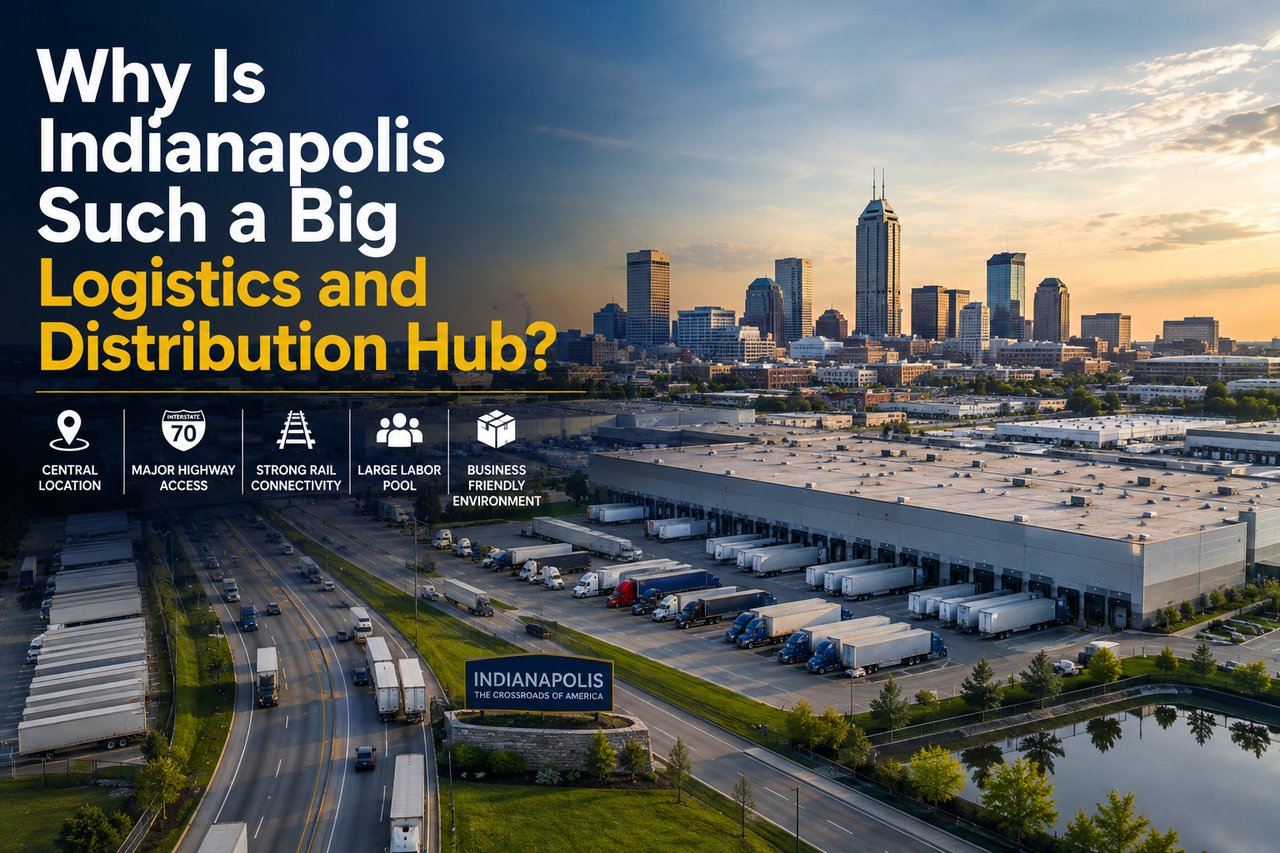
If you drive I-70 west through Plainfield or I-65 north through Whitestown, you'll see mile after mile of massive warehouses. Indianapolis logistics real estate has become one of the most sought-after property types in the Midwest. National retailers, e-commerce companies and third-party logistics providers keep choosing Central Indiana. Here's why — and what it means for local businesses, landlords and investors.
The Crossroads of America: interstates that drive Indianapolis logistics
Four major interstates converge on Indianapolis:
• I-65 connects Chicago, Indianapolis, Louisville and Nashville
• I-69 runs northeast toward Fort Wayne and southwest toward Evansville
• I-70 links Columbus, Indianapolis and St. Louis
• I-74 connects Cincinnati and Indianapolis with Peoria
All four tie into the I-465 beltway. For a distribution center in Indianapolis, that means trucks can reach a large majority of U.S. households within a day's drive. Few metro areas match that reach, and freight costs are a major reason companies choose Indianapolis logistics real estate.
Air cargo: the FedEx hub at Indianapolis International Airport
Indianapolis International Airport is home to FedEx's second-largest hub in the world. Companies shipping pharmaceuticals, medical devices, electronics and other high-value, time-sensitive goods value warehouses near the airport. The airport submarket — including nearby Plainfield and the southwest side of Indianapolis — benefits directly.
Rail and water connections
CSX's Avon Yard on the west side and the Indiana Rail Road serve shippers moving heavy and bulk products. Indiana's three ports — Burns Harbor on Lake Michigan and Jeffersonville and Mount Vernon on the Ohio River — add barge and international connections.
Indiana's business climate supports logistics investment
• Property tax caps: Indiana's constitution caps commercial and industrial property taxes at 3% of gross assessed value.
• Right-to-work law since 2012.
• Local tax abatements for qualifying new construction and equipment.
• Pro-growth communities that actively recruit distribution and manufacturing projects.
Where Indianapolis logistics real estate is concentrated
• Plainfield and Hendricks County — I-70 and airport access
• Whitestown and Lebanon — I-65 north toward Chicago
• Greenwood, Whiteland and Franklin — I-65 south
• Mt. Comfort and Greenfield — I-70 east
• Indianapolis's inner industrial corridors — older, smaller buildings close to customers
Each submarket has different rents, labor pools and building types.
What Indianapolis's logistics boom means for local businesses
Strong national demand can push rents up in the most popular corridors and create competition for workers. But it also creates a deep market with many building options and a strong resale market for owners. Local companies that need distribution space benefit from the infrastructure national players helped build.
What it means for investors and owners
Investors value Indianapolis logistics real estate because demand comes from many industries and tenants tend to renew once they've invested in racking and automation. Investors still need to watch new construction, sublease space and building functionality.
Choosing the right Indianapolis distribution center location
Not every company needs a 500,000-square-foot building on I-70. When I help a client choose a location for an Indianapolis distribution center, we start with where the freight comes from and where it goes. A company receiving containers from the coasts and shipping to stores across the Midwest may favor plainfield or the airport area. A business delivering to homes and job sites across Hamilton County may be better served by a smaller building on the north side of Indianapolis, in Noblesville or along the I-69 corridor in Fishers.
Labor is the next filter. The largest Indianapolis logistics corridors compete for the same warehouse workers, and shift wages, transit access and commute patterns all matter. A building that saves money on rent but can't staff a second shift isn't a bargain.
Then comes the building itself: clear height, dock count, trailer parking, power for automation, and room to expand. Finally, we compare total occupancy cost — rent, NNN charges, taxes after any abatement expires, utilities and labor — across two or three submarkets side by side.
The future of Indianapolis logistics real estate
The next phase of Indianapolis logistics real estate will be shaped by power, automation and proximity. Buildings with strong electrical service will win automated and electrified tenants. Smaller last-mile facilities closer to Carmel, Fishers and Greenwood households will stay in high demand because land there is scarce. And after a historic construction wave slowed, the pipeline of new buildings is thinner, which could tighten the market for modern space over the next few years. Companies planning a move in the next 12 to 24 months should start evaluating options now.
Frequently asked questions
Why do companies put distribution centers in Indianapolis? Interstate access, central location, air cargo, a logistics workforce and competitive costs.
Which Indianapolis suburbs have the most warehouses? Plainfield, Whitestown, Greenwood and the Mt. Comfort corridor are among the largest concentrations.
Is Indianapolis good for last-mile delivery? Yes, especially from smaller buildings near Carmel, Fishers and inner-ring neighborhoods.
Find distribution space in Indianapolis
I help companies compare Indianapolis logistics real estate across every major corridor so they land in the location that fits their customers, workforce and budget.
Annie Scott — Annie Scott Realty Group LLC / F.C. Tucker Company Cell: (317) 902-8622 ·