Older office buildings face tough competition from newer, amenity-rich properties. But many can be repositioned to attract tenants and increase value. Here are the value-add office building strategies I see working in Central Indiana.
Upgrade first impressions
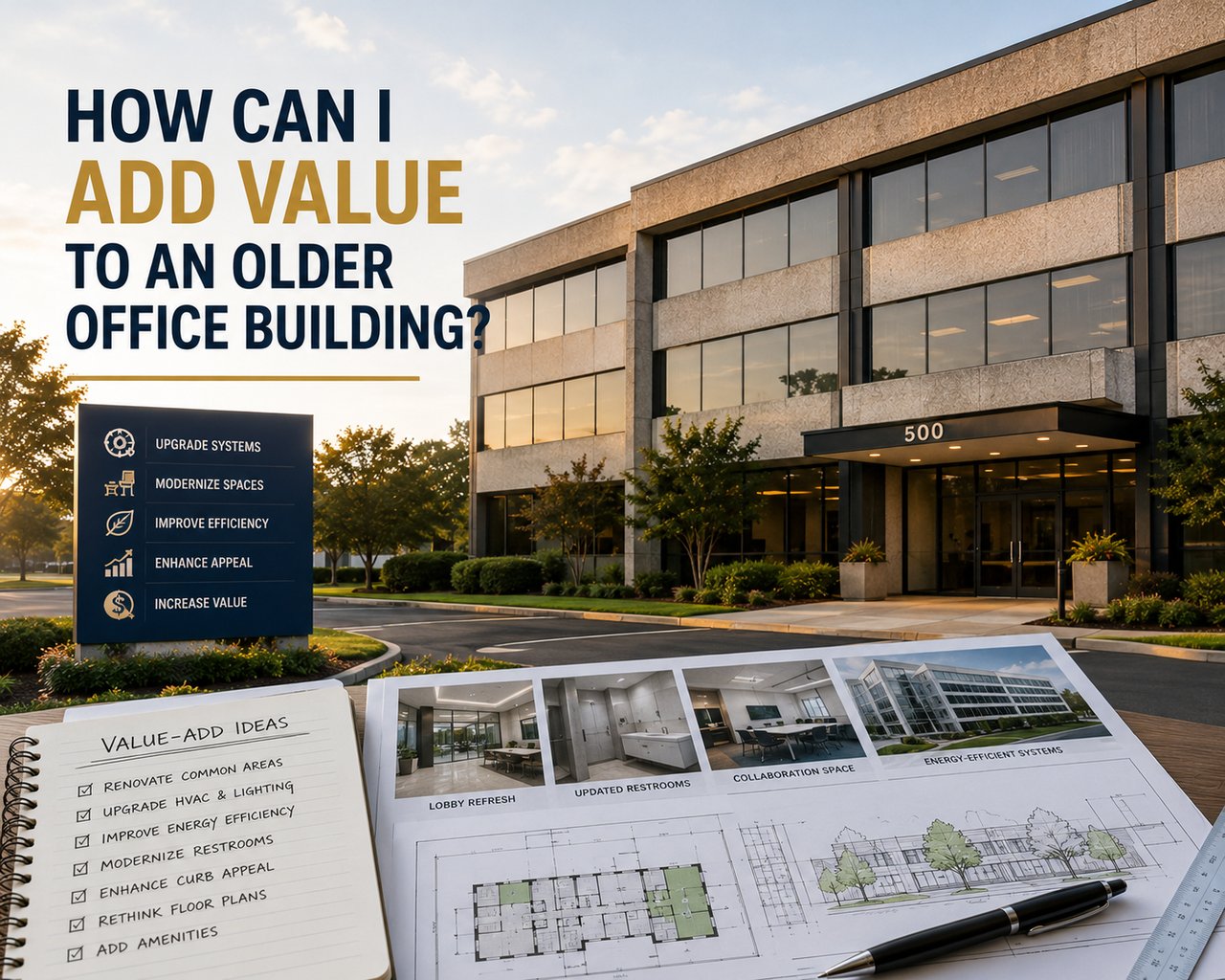
Tenants judge a building in the first minute: parking lot, entrance, lobby, elevators and restrooms. Updating these areas often delivers the biggest return.
Build spec suites
Move-in-ready suites with modern finishes, open layouts and good lighting lease faster than raw or dated space, especially for small and mid-sized tenants.
Add amenities
• Shared conference centers
• Tenant lounges or cafés
• Fitness rooms with showers
• Outdoor seating
• Bike storage and EV charging
Modernize building systems
HVAC upgrades, LED lighting, smart controls and improved Wi-Fi reduce costs and improve comfort.
Rethink floor plans
Dividing large floors into smaller suites can match demand from small professional firms. Conversely, combining small suites can attract larger tenants.
Rebrand and market
A new name, signage, website, photography and broker outreach help reposition a building in the market.
Target growing tenant types
Medical, professional services, nonprofits, education and government tenants may value well-located, renovated Class B buildings.
Control costs
Energy efficiency and better vendor contracts improve NOI and help keep rents competitive.
An example of repositioning
An investor bought a dated three-story office building on Indianapolis's north side with low occupancy. After renovating the lobby and restrooms, adding a shared conference room and tenant lounge, building four spec suites and upgrading lighting, the building leased up steadily over two years and its value increased substantially.
Budgeting a value-add plan
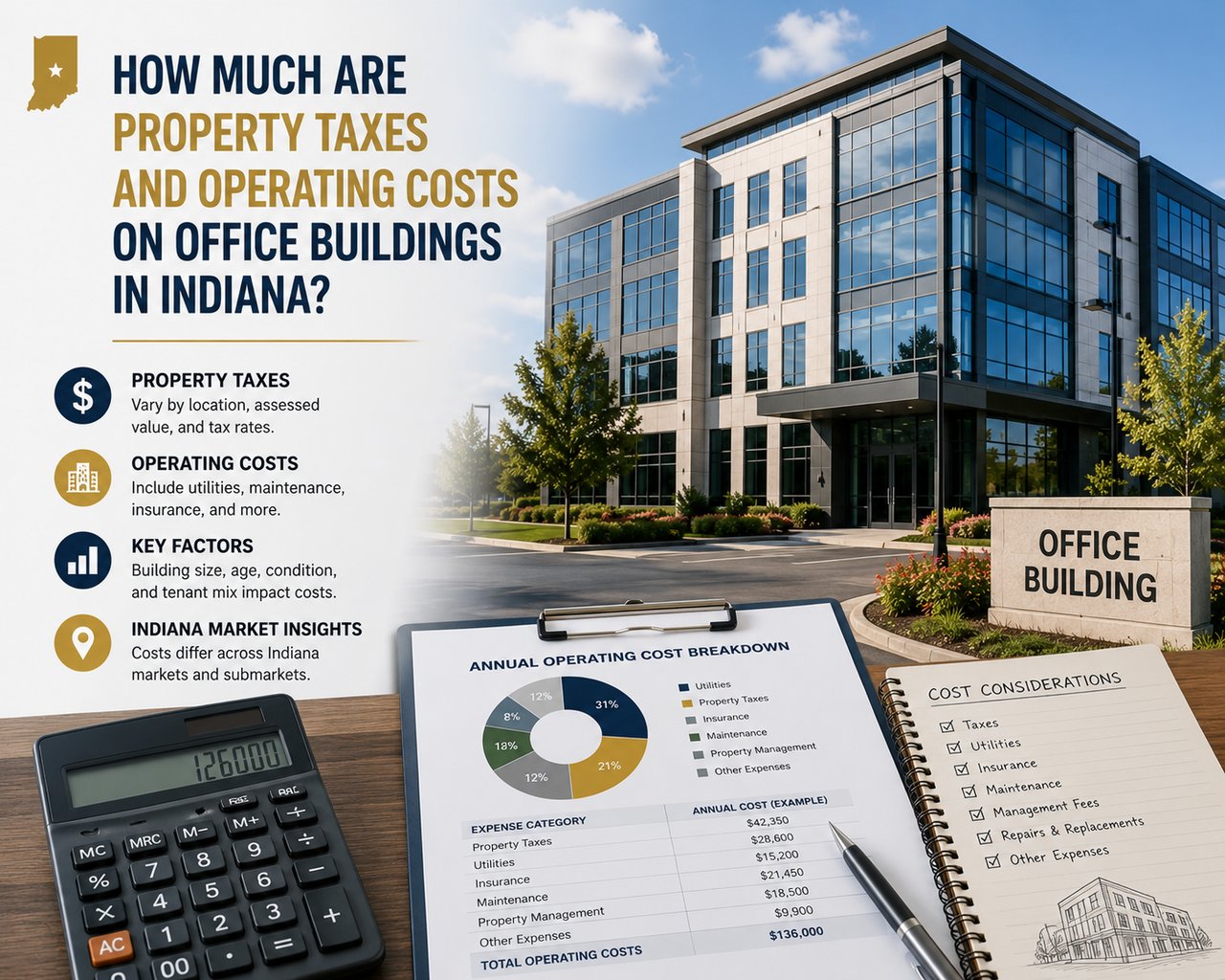
A realistic value-add office building plan includes:
• Common area renovations
• Spec suite construction
• Tenant improvement allowances for new leases
• Leasing commissions
• Building system upgrades
• Marketing costs
• Carrying costs during lease-up
• A contingency for surprises
Investors who underestimate these costs often run out of capital before the building stabilizes.
Phasing improvements
Phasing allows owners to manage cash and test the market. Many start with high-impact common area improvements and one or two spec suites, then add more as leasing momentum builds. Tracking tour feedback helps guide which improvements matter most to tenants. A phased approach reduces risk while steadily repositioning older office buildings in Indianapolis and the surrounding suburbs.
Frequently asked questions
What upgrades add the most value? Lobbies, restrooms, spec suites and amenities often have the biggest impact.
Are spec suites worth the cost? Often, because they lease faster.
How long does repositioning take? Typically one to three years.
Reposition your office building with Annie Scott
I help Central Indiana office owners plan upgrades and leasing strategies that increase value.
Annie Scott — Annie Scott Realty Group LLC / F.C. Tucker Company Cell: (317) 902-8622 ·