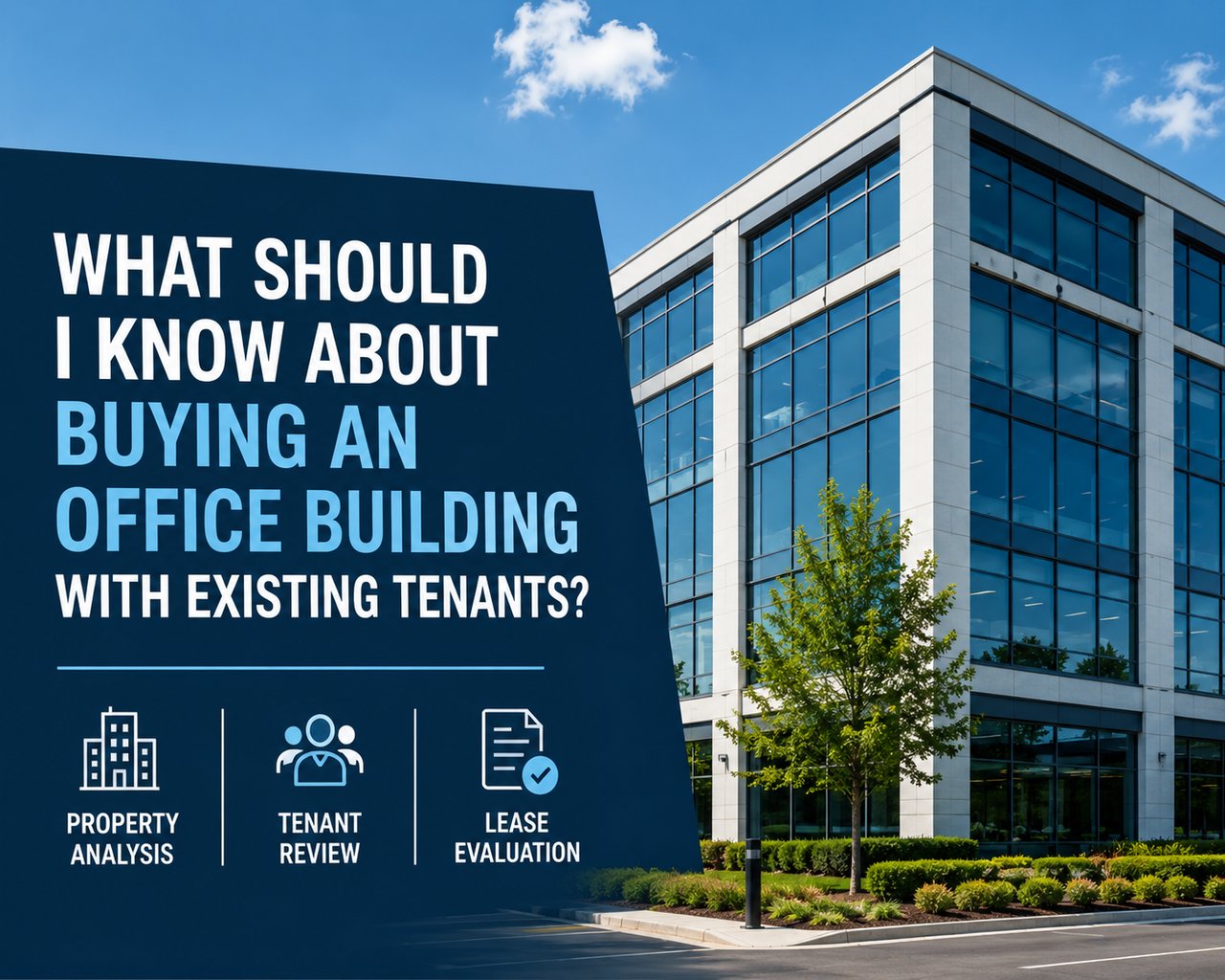
When you buy an office building with tenants, you inherit their leases — good terms and bad. Understanding exactly what you're buying is essential. Here's what to know about buying a leased office building in Central Indiana.
Leases transfer with the building
Existing leases remain in effect after a sale. You step into the landlord's role, including obligations to provide services, honor renewal options and fund promised improvements.
Review every lease and amendment
Look for:
• Rent, escalations and expirations
• Expense structures and base years
• Renewal, expansion and termination options
• Rights of first refusal to purchase the building
• Unfunded tenant improvement allowances or free rent
• Exclusive-use provisions
• Relocation rights
• Co-tenancy or signage commitments
Tenant estoppel certificates
Estoppels are signed statements from tenants confirming lease terms, rent paid, deposits and any defaults or disputes. They protect buyers from surprises, such as side agreements the seller didn't disclose.
SNDAs
Lenders often require subordination, non-disturbance and attornment agreements from tenants, confirming their leases are subordinate to the new loan while protecting their occupancy.
Security deposits and prorations
Deposits transfer to the buyer at closing. Rent, operating expense reconciliations and prepaid amounts are prorated. Clarify who handles year-end reconciliations for the year of sale.
Tenant relationships
Meet key tenants after closing to introduce yourself and understand their needs. A smooth transition supports renewals.
An example of lease review finding value
A buyer reviewing leases for a multi-tenant office building in Carmel discovered that one tenant had an unfunded improvement allowance owed by the seller. We negotiated a credit at closing equal to the obligation, so the buyer didn't pay for the seller's commitment.
Watch for purchase options and rights of first refusal
Some tenants hold rights to purchase the building or to match an offer before it's sold to someone else. These rights can delay or derail a sale and may need to be waived before closing. Identify them early in due diligence and coordinate with the seller to obtain waivers.
Evaluating tenant quality
Review major tenants' financial statements where available, payment histories and business outlooks. A building full of long-term tenants with strong credit is worth more than one with short leases and struggling businesses. Talking with tenants can also reveal expansion plans, renewal intentions and concerns about the building.
Planning renewals from day one
After closing, map lease expirations and begin renewal conversations early with tenants whose leases end in the next two years. Small investments — refreshed paint and carpet, updated restrooms, improved lighting — can secure renewals and protect income. Proactive planning is one of the most important steps after buying a leased office building.
Frequently asked questions
Do leases stay in place after a sale? Yes, generally.
What is a tenant estoppel? A tenant's confirmation of lease terms and status.
Who pays unfunded tenant allowances? Negotiate a credit from the seller if they're owed.
Buy a leased office building with confidence
I help Central Indiana buyers review leases and negotiate protections when acquiring tenant-occupied office buildings.
Annie Scott — Annie Scott Realty Group LLC / F.C. Tucker Company Cell: (317) 902-8622 ·