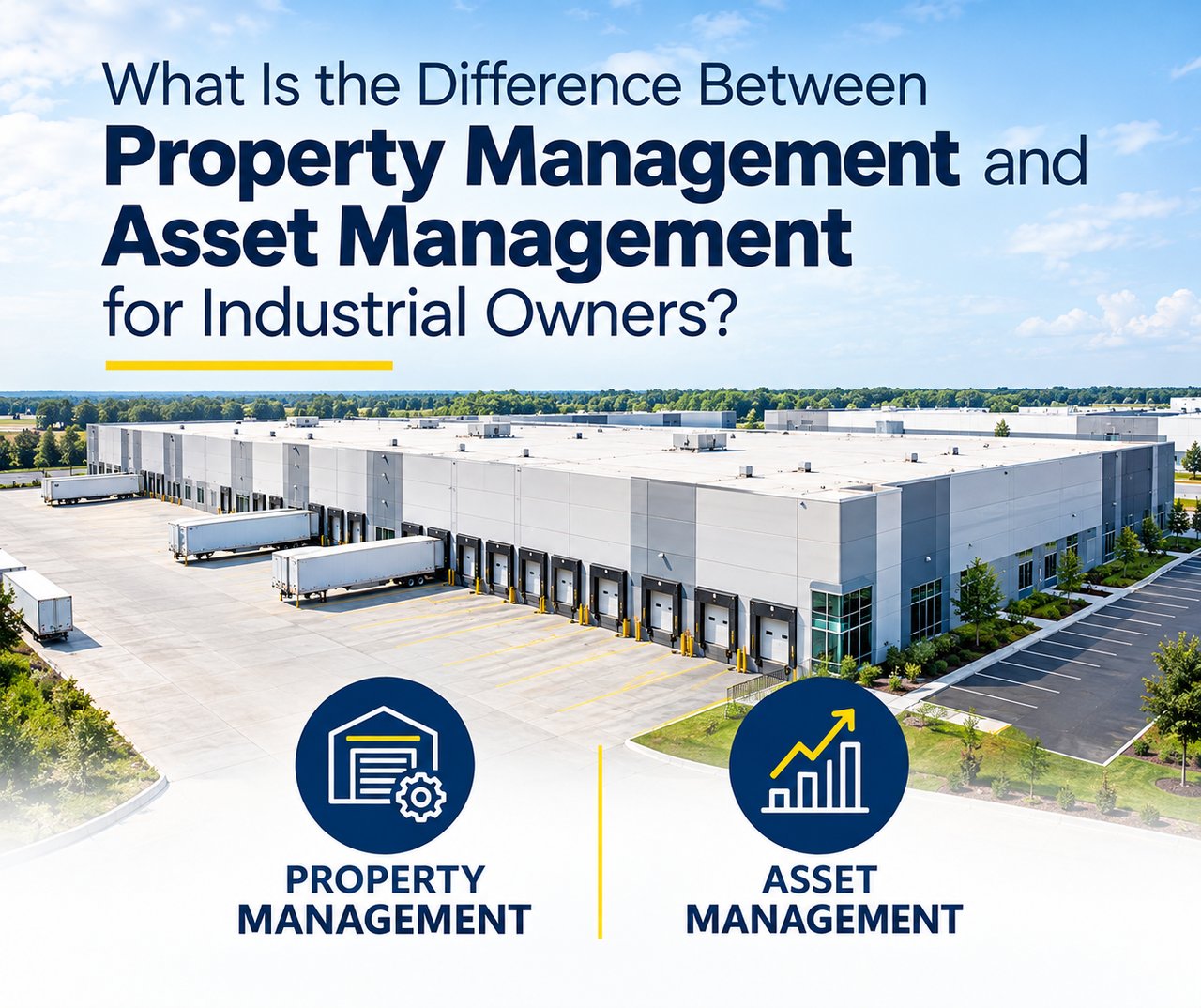
Many industrial owners in Indiana use the terms "property management" and "asset management" interchangeably. They're not the same, and understanding the difference can unlock real value in your portfolio. In my experience, two owners can buy similar buildings at similar prices and end up with very different results — and the difference is usually asset management.
What property management does
Property management is operational. It keeps the building running: collecting rent, fixing leaks, plowing snow, paying vendors and reconciling expenses. It's essential, but it's reactive by nature.
What industrial asset management does
Asset management is strategic. It asks one question constantly: how do we grow the value of this property? An industrial asset manager in Indiana thinks about:
• Lease strategy: staggering expirations to avoid large vacancy events
• Rent growth: identifying below-market leases and planning renewals
• Capital planning: choosing improvements that raise rents or reduce vacancy
• Tenant mix: balancing uses to reduce parking, noise and yard conflicts
• Financing: deciding when to refinance and on what terms
• Exit planning: choosing when and how to sell for maximum value
Why asset management matters most in small-bay industrial
In small-bay and multi-tenant industrial buildings — common in Indianapolis, Greenwood, Noblesville and Fishers — asset management is where operators earn their returns. These buildings have many tenants, frequent turnover and constant leasing decisions. Turning over units efficiently, pricing renewals correctly and keeping the building full creates value that passive owners leave on the table. Operational execution is often the real "secret" in industrial investing.
An asset management example
An investor buys a 40,000-square-foot multi-tenant industrial building in Indianapolis with ten tenants. Several are paying well below market, and four leases expire within the same six months. A strong asset manager:
1. Extends two leases early to stagger expirations
2. Prices renewals closer to market rents with modest, fair increases
3. Invests in LED lighting, paving and new overhead doors
4. Re-tenants one unit with a business that needs less parking
5. Refinances after occupancy and income stabilize
Because industrial buildings are valued on net operating income, higher rents and lower vacancy translate directly into a higher sale price. Over a few years, the building's value can increase significantly without any change in the market.
Signs your building needs asset management, not just property management
• Lease expirations cluster in the same year
• Rents haven't been compared to market in years
• Capital projects happen only after failures
• Vacancies take longer to fill than in nearby buildings
• You don't have a clear plan for when to sell or refinance
Who should provide asset management?
Large investors employ dedicated asset managers. Smaller owners often handle it themselves with help from a broker, property manager, lender and accountant. A broker who tracks the market daily can provide rent comparables, leasing strategy and timing advice.
Building an annual asset plan for an Indiana industrial property
Every industrial owner should write a simple one-page asset plan each year:
1. Rent roll review: list every tenant, rent, expiration date and how current rent compares to market.
2. Leasing priorities: which renewals to start, which vacancies to fill and target rents.
3. Capital plan: roof, paving, HVAC, dock and lighting projects for the next three years, with estimated costs.
4. Expense review: taxes, abatement schedules, insurance and CAM trends.
5. Financing check: loan maturity, interest rate and refinance opportunities.
6. Hold or sell: what the property is worth today and whether selling or holding better serves your goals.
This exercise takes a few hours and often reveals thousands of dollars in opportunity. It's the simplest form of industrial asset management in Indiana — and one most small owners skip.
Frequently asked questions
Do small industrial owners need asset management? Yes — even if the owner performs it personally.
What creates the most value in industrial asset management? Leasing strategy and bringing rents to market without losing good tenants.
How often should I review my industrial property strategy? At least annually, and before major lease expirations.
Get a strategic review of your Indiana industrial property
I provide lease and value analyses for industrial owners across Indiana, helping them plan renewals, capital projects and exit timing.
Annie Scott — Annie Scott Realty Group LLC / F.C. Tucker Company Cell: (317) 902-8622 ·