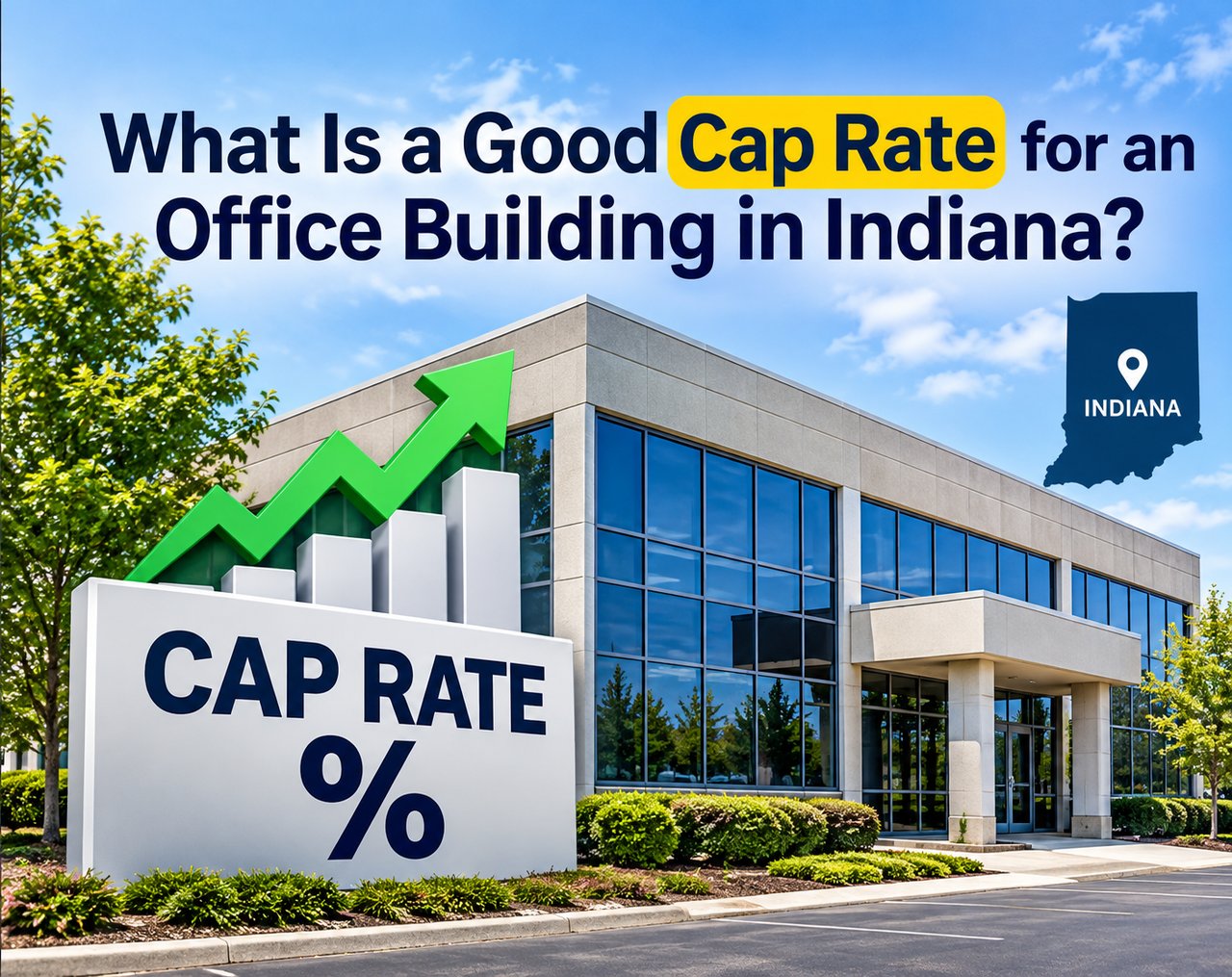
Cap rates are a common shorthand for pricing income-producing real estate, and office buildings are no exception. But office cap rates in Indiana vary widely depending on quality, tenants, lease terms and market conditions. Understanding what drives them helps investors avoid overpaying.
How a cap rate is calculated
Cap rate = Net Operating Income ÷ Purchase Price If an office building produces $300,000 of NOI and sells for $4,000,000, the cap rate is 7.5%. Why office NOI needs careful scrutiny Office buildings have higher ongoing costs than many other property types: tenant improvements, leasing commissions, building systems and common area maintenance. A cap rate based on NOI that ignores these capital costs can make a building look better than it is.
What drives office cap rates
• Building quality and age
• Location and submarket strength
• Tenant credit and lease term
• Occupancy and rollover risk
• Property type: medical office often trades differently than general office
• Interest rates and lender appetite
• Buyer pool size
Single-tenant vs. multi-tenant office
Single-tenant office buildings leased long-term to strong companies may trade at lower cap rates than multi-tenant buildings with frequent rollover. But single-tenant buildings carry concentration risk: if that tenant leaves, income drops to zero.
Medical office cap rates
Medical office buildings often benefit from sticky tenants, specialized improvements and healthcare demand, which can support stronger pricing than comparable general office buildings.
What is a "good" office cap rate?
A good cap rate is one that properly compensates you for risk. A higher cap rate on a building with short leases, heavy capital needs and weak demand may be worse than a lower cap rate on a well-leased, well-located building.
An example of cap rate context
Two office buildings in Central Indiana were offered at different cap rates. The higher cap rate building had three major leases expiring within 18 months and aging HVAC. The lower cap rate building had long- term medical tenants and recent renovations. After modeling re-leasing costs, the lower cap rate building offered the better risk-adjusted return.
Going-in vs. stabilized cap rates
For value-add office buildings, investors often distinguish between the going-in cap rate — based on current income — and the stabilized cap rate after leasing vacancies and improving the building. A low going-in cap rate may be acceptable if the stabilized yield, after accounting for leasing and capital costs, meets your goals. Model both carefully and be realistic about how long stabilization will take.
How lenders view office cap rates
Lenders often apply conservative assumptions to office properties, including higher cap rates for valuation and stricter debt service coverage requirements. That can reduce loan amounts and require more equity. Understanding lender perspectives before you make an offer helps you structure financing realistically and avoid surprises when evaluating office cap rates in Indiana.
Frequently asked questions
Are office cap rates higher than other property types? Often, reflecting higher perceived risk.
Do cap rates include tenant improvement costs? Not directly; analyze them separately.
Are medical office cap rates different? They often trade differently due to healthcare demand.
Analyze office cap rates with Annie Scott
I help Indiana investors look beyond headline cap rates to the real risks and returns of office buildings.
Annie Scott — Annie Scott Realty Group LLC / F.C. Tucker Company Cell: (317) 902-8622 ·