Businesses change faster than leases do. A company that signed a seven-year warehouse lease may consolidate, downsize or relocate long before the term ends. Subleasing lets that tenant recover part of its rent — and gives other businesses a chance at discounted, often move-in-ready space. Here's how an industrial sublease in Indianapolis works from both sides of the deal.
What is an industrial sublease?
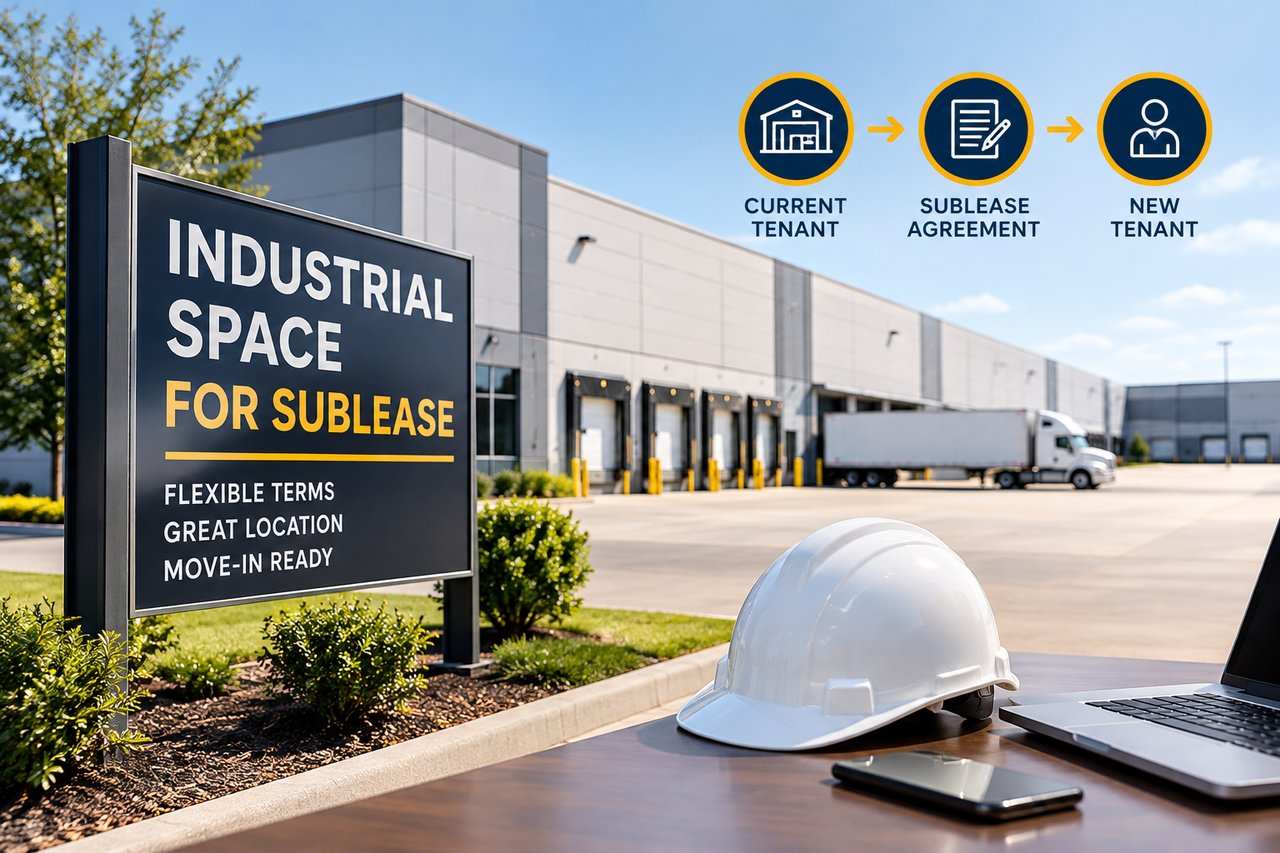
In a sublease, the original tenant (the sublandlord) leases all or part of its space to another business (the subtenant) for some or all of the remaining lease term. The original lease stays in place. The sublandlord continues paying the landlord and collects rent from the subtenant.
For tenants: how to sublease industrial space in Indianapolis
Read your lease first. Most Indianapolis industrial leases require landlord consent to sublease. Many also allow the landlord to "recapture" the space instead, or require you to share any profit if the subtenant pays more than you do. Know these rules before you market the space.
Remember you're still liable. Subleasing doesn't release you from the original lease. If your subtenant stops paying or damages the space, you remain responsible. Screen subtenants carefully, collect a security deposit and consider personal guarantees.
Price realistically. Sublease space usually trades at a discount to direct space because it comes with shorter terms, as-is condition and less flexibility. Offering racking, furniture, forklifts or office equipment can make your space stand out.
Market it professionally. Good photos, accurate specs and outreach to brokers and potential users shorten vacancy and reduce your carrying cost.
For businesses: the benefits of sublease space in Indianapolis
• Lower rent than comparable direct space
• Existing improvements such as offices, racking or electrical work
• Shorter commitments, ideal for uncertain growth
• Speed, since many sublease spaces are ready to occupy
The risks for subtenants
Your rights depend on the original lease. If the sublandlord defaults, your occupancy could be at risk unless you secure a recognition or non-disturbance agreement from the landlord. Renewal options usually aren't available, and you may inherit restrictions on use, signage or alterations that you didn't negotiate.
Where sublease space appears in Central Indiana
Sublease availability rises when the economy slows or when large users overbuild. In Central Indiana, sublease listings often appear in big-box buildings around Plainfield, Whitestown, Greenwood and Mt. Comfort when companies right-size their networks. Smaller subleases appear in flex and small-bay buildings in Carmel, Fishers, Noblesville and Indianapolis when local businesses outgrow or consolidate.
An example of an industrial sublease in Indianapolis
A consumer products company leased 120,000 square feet in Plainfield but consolidated operations and needed only 70,000. Rather than pay for empty space for four years, it subleased the remaining 50,000 square feet — with racking already installed — to a regional distributor needing short-term space for a new contract. The company recovered much of its rent, and the subtenant moved in within weeks at a discount to direct-lease rates. Both sides won because the deal was priced realistically and structured with landlord consent from the start.
Sublease checklist
• Review consent, recapture and profit-sharing clauses
• Confirm remaining term and any renewal limitations
• Document the space's condition with photos
• Decide what furniture, fixtures and equipment are included
• Require security deposits and financial review
• Obtain landlord consent in writing
Frequently asked questions about industrial subleases
Is sublease space cheaper in Indianapolis? Usually, because of shorter terms and as-is condition.
Can my landlord refuse a sublease? Many leases allow refusal on reasonable grounds; read your consent clause.
Am I still responsible after I sublease? Yes, unless the landlord formally releases you.
How long are sublease terms? They run for the remaining term of the original lease or less. Sublease industrial space in Indianapolis with an expert
Whether you need to market excess space or find a sublease opportunity, I help Indianapolis businesses navigate consent, pricing and risk.
Annie Scott — Annie Scott Realty Group LLC / F.C. Tucker Company Cell: (317) 902-8622 ·