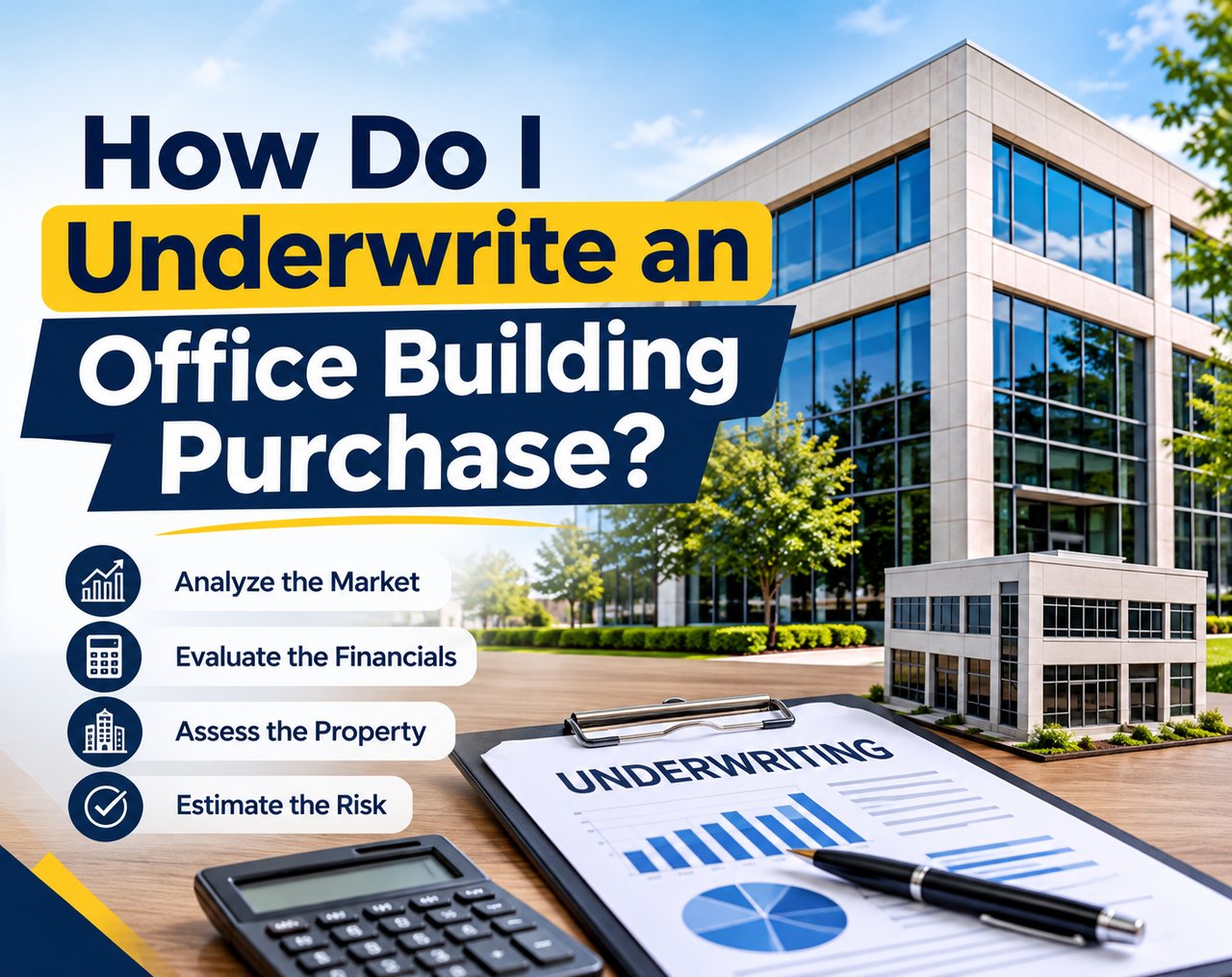
Office buildings are among the most complex commercial properties to underwrite. Leases expire on different schedules, tenants need improvements to renew, and building systems require significant capital. Here's the framework I use for underwriting an office building in Central Indiana.
Step 1: Review every lease
Record rent, escalations, expiration, renewal options, expense structure, base years, termination rights and landlord obligations for each tenant.
Step 2: Build a rent roll and lease expiration schedule
Map expirations by year. Concentrated rollover creates risk.
Step 3: Estimate market rent
Compare in-place rents with recent signed leases in similar buildings. Use realistic, not aspirational, assumptions.
Step 4: Model renewals and vacancies
Assign renewal probabilities. For tenants likely to leave, model downtime, free rent, improvement allowances and leasing commissions for new tenants.
Step 5: Project operating expenses
Include taxes, insurance, utilities, janitorial, repairs, management and reserves. Understand how much is recovered from tenants.
Step 6: Plan capital expenses
Inspect roofs, HVAC, elevators, parking lots, restrooms and common areas. Budget for replacements and upgrades needed to compete.
Step 7: Layer in financing
Model loan terms and test sensitivity to interest rates.
Step 8: Project the exit
Estimate the sale price at the end of the hold using a conservative exit cap rate.
Step 9: Stress-test
What if your largest tenant leaves? What if leasing takes twice as long? What if rents stay flat?
Key metrics
Look at cash-on-cash return, internal rate of return, equity multiple and debt service coverage under base and downside scenarios.
An example of underwriting changing a deal
A buyer considered a multi-tenant office building with a seller pro forma showing strong returns. Our underwriting found that two major tenants' leases expired within a year and that the building's chillers were near the end of their life. After modeling renewal costs and capital needs, the buyer negotiated a lower price and a capital credit.
Typical re-leasing assumptions to include
When underwriting an office building, model realistic costs for each lease that may turn over:
• Downtime between tenants, often several months or more
• Free rent offered to new tenants
• Tenant improvement allowances for new or renewing tenants
• Leasing commissions for both landlord and tenant brokers
• Marketing and legal costs
Renewing tenants generally cost less than new tenants, which is why tenant retention is so valuable in office investing.
Talking to tenants during due diligence
Where sellers allow, conversations with major tenants can reveal renewal intentions, satisfaction with the building and space needs. Tenant estoppels confirm lease terms, but direct conversations provide context that numbers can't. Combining tenant insight with careful financial modeling leads to stronger underwriting of an office building and fewer surprises after closing.
Frequently asked questions
What is the biggest risk in office underwriting? Lease rollover and the cost to re-lease space.
Should I trust a seller's pro forma? Use it as a starting point and build your own model.
What reserves should I budget? Enough for capital items, tenant improvements and leasing commissions.
Underwrite office deals with Annie Scott
I help investors underwrite office buildings across Central Indiana with conservative, realistic assumptions.
Annie Scott — Annie Scott Realty Group LLC / F.C. Tucker Company Cell: (317) 902-8622 ·