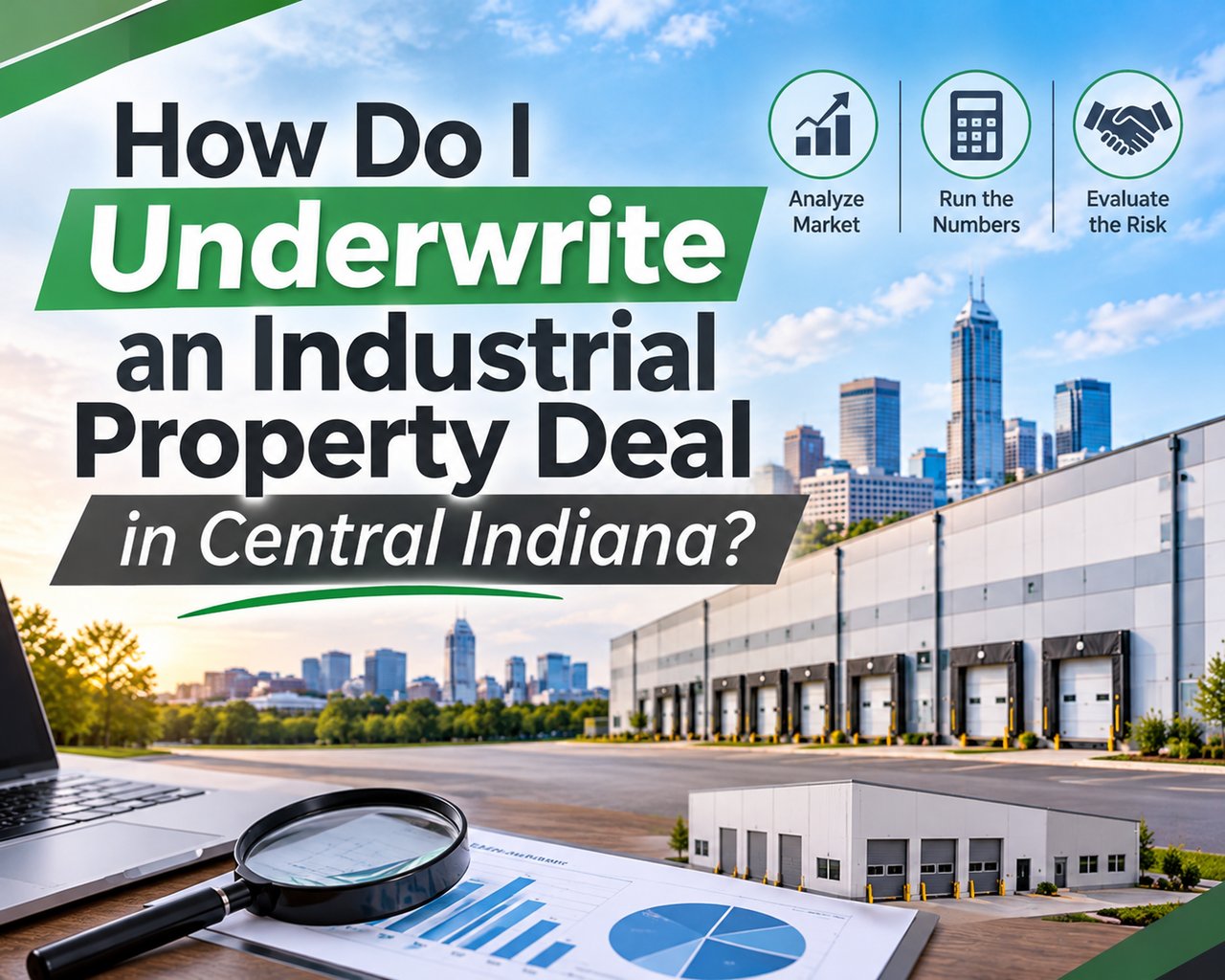
Underwriting is the process of deciding what a property is worth to you and whether it meets your goals. In industrial real estate, it's both art and science — and it's where many investors either protect themselves or make expensive mistakes. Here's the ten-step framework I use for underwriting industrial real estate in Central Indiana.
Step 1: Understand the building
Gather size, clear height, loading, power, sprinklers, office percentage, parking, yard and age. Compare those specs to what tenants in that submarket demand today. A building that fits current tenant needs is easier to lease and finance.
Step 2: Understand the location
How close is the property to an interstate interchange? Is it in a strong submarket like Plainfield, Whitestown or Greenwood, a tight infill area in Indianapolis, or a supply-constrained suburb like Carmel? Is the labor pool deep? What is the zoning, and what could it allow later?
Step 3: Review every lease
Read every lease and amendment. Note rent, escalations, expiration dates, renewal options, expense responsibilities, assignment rights and any termination or purchase options.
Step 4: Compare rents to market
Are tenants paying above or below market? Below-market leases with near-term expirations offer upside. Above-market rents may be at risk at renewal.
Step 5: Model operating expenses
Confirm taxes — including abatement schedules — insurance, CAM, management and non-recoverable costs. Budget reserves for roof, paving and HVAC.
Step 6: Plan for vacancy
Assume tenants will leave at some point. How long will re-leasing take, and what will it cost in downtime, commissions and improvements?
Step 7: Estimate capital needs
A roof replacement or parking lot rebuild can erase years of cash flow. Get inspections and price these items into your offer.
Step 8: Layer in financing
Model loan terms and test the deal at different interest rates. Watch for negative leverage.
Step 9: Project the exit
What will the property sell for in five, seven or ten years? Use conservative exit cap rates — typically higher than your purchase cap rate.
Step 10: Stress-test everything
What happens if your largest tenant leaves? If rates rise? If rents flatten? If a major repair hits in year two? A good deal survives reasonable stress.
An underwriting example
An investor evaluates a 60,000-square-foot single-tenant building in Indianapolis. The seller's pro forma shows a solid cap rate. Our underwriting found the tenant's lease expires in three years, the roof is near the end of its life, and the tax abatement steps down next year. After adjusting NOI for higher taxes, adding a roof reserve and modeling a possible vacancy, the supportable price was meaningfully lower than the asking price. The investor used that analysis to negotiate a better price and a roof credit.
Move fast, but stay patient
The best industrial investors I work with are quick to evaluate and make offers but patient until the numbers truly work. Speed wins deals; discipline wins returns.
Underwriting mistakes I see most often
• Using asking rents instead of signed lease rents to estimate market
• Ignoring tax abatement step-downs in the expense projections
• Assuming every tenant renews
• Leaving out leasing commissions and tenant improvements on rollover
• Using the same cap rate to buy and sell
• Underestimating roof and paving costs in Indiana's freeze-thaw climate
Each of these can turn an attractive deal into a disappointing one. A conservative, well-documented underwriting model also makes financing easier, because lenders trust buyers who show their work. Strong underwriting of industrial real estate is the single best predictor of investment success I've seen.
Frequently asked questions
What is the most important part of underwriting industrial real estate? Understanding leases and re- leasing risk.
Should I trust the seller's pro forma? Use it as a starting point, then build your own assumptions.
What exit cap rate should I use? A conservative rate, typically above your going-in cap rate.
Get a second opinion on your industrial deal
I help investors underwrite industrial deals across Indiana with realistic assumptions and local market data.
Annie Scott — Annie Scott Realty Group LLC / F.C. Tucker Company Cell: (317) 902-8622 ·